How Verona’s Arena Was Built: Roman Methods and Materials
A detailed look at the Verona Arena’s Roman construction: quarries, masonry, vaults, logistics, and the structural system behind its longevity.
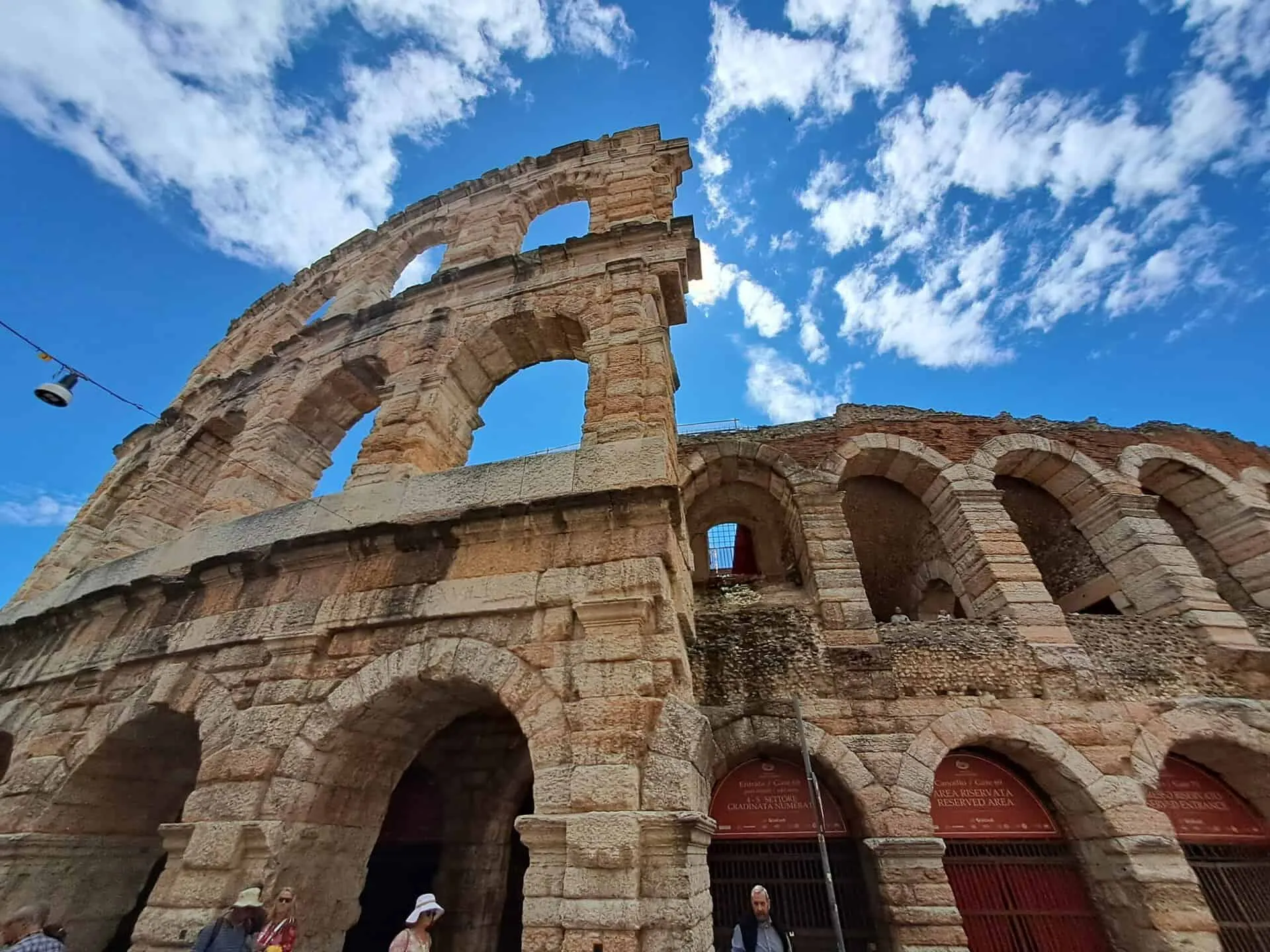
The Verona Arena is a masterclass of Roman construction meeting urban ambition. Its fabric blends limestone ashlar, opus caementicium, and a disciplined hierarchy of arches and vaults.
Overview
- Type: Roman amphitheatre (elliptical)
- Primary materials: Verona limestone, lime mortar, opus caementicium
- Key systems: Arcades, radial vaults, cavea tiers, vomitoria
The Arena’s build is a coordination of geology, geometry, and governance — a 1st–2nd century project with millennia of service.
🪨 Quarries, Transport, and Materials
- Local limestone: Verona’s quarries supplied durable blocks; density balanced strength and workability.
- Opus caementicium: Roman concrete used in cores and vault backs; lime + pozzolana.
- Iron ties (selective): Non-visible cramps ensured local continuity; monitored today for corrosion.
- Timber: Temporary centering and scaffolds; recovered and reused.
| Material | Source | Property | Use |
|---|---|---|---|
| Limestone | Local quarries | Compressive strength, weathering | Facing, arches |
| Lime mortar | Kilns | Breathable, plastic | Bedding, joints |
| Concrete | Lime + aggregate | Mass, stiffness | Cores, vault backs |
| Timber | Regional forests | Flexibility | Centering, scaffolds |
🧱 Wall Fabric and Joints
- Ashlar courses: Regular bed joints promote even load paths.
- Lime mortar: Breathable, accommodating micro-movements over centuries.
- Weep detailing: Joints and drips mitigate capillary rise.
- Anathyrosis: Dressed perimeter of stone contacts to improve fit.
🧩 Arches, Vaults, and Thrust Management
- Perimeter arcades: Repetitive arches create a lateral rhythm that locks the perimeter.
- Radial vaults: Carry crowds to seats while knitting the ring structurally.
- Buttress effect: Exterior walls act as continuous buttresses against vault thrust.
$$ ext{Vault thrust} propto rac{w cdot l}{h} quad ext{(schematic relation)} $$
🛠️ Construction Sequencing
- Perimeter foundation ring set first to ensure geometry.
- Arcade bays erected bay-by-bay; centering reused.
- Radial stairs and vomitoria carved into mass; vaults dry-tested.
- Cavea completed from lower to upper tiers.
- Finishes and drainage refined; commissioning.
Logistics synchronized quarry output, river barges, and urban staging — a Roman supply chain centuries ahead of its time.
📋 Quality Checklist (Roman Context)
- Stone dressing tolerances within target
- Mortar cure and humidity checks
- Centering stability tests
- Vault load trials before opening
Timeline (Simplified)
| Phase | Focus | Outcome |
|---|---|---|
| Foundations | Ring continuity | Geometry locked |
| Arcades | Arches + piers | Lateral rhythm |
| Circulation | Stairs + tunnels | Crowd-ready fabric |
| Seating | Cavea tiers | Operational capacity |
The outcome is a fabric that reads calm in section and ordered in elevation — the Roman recipe for longevity.
[^sources]: Archaeological campaigns in Verona confirm lime mortar composition and block typologies.
Om forfatteren

Verona Arena Editorial
Som Verona-entusiast og rejseforfatter har jeg skabt denne guide for at hjælpe besøgende med at få kontakt med Arenaens ånd — romersk ingeniørkunst, der møder moderne musik, i en omfavnelse af sten og sang.
Tags
Comments (0)
Loading comments...